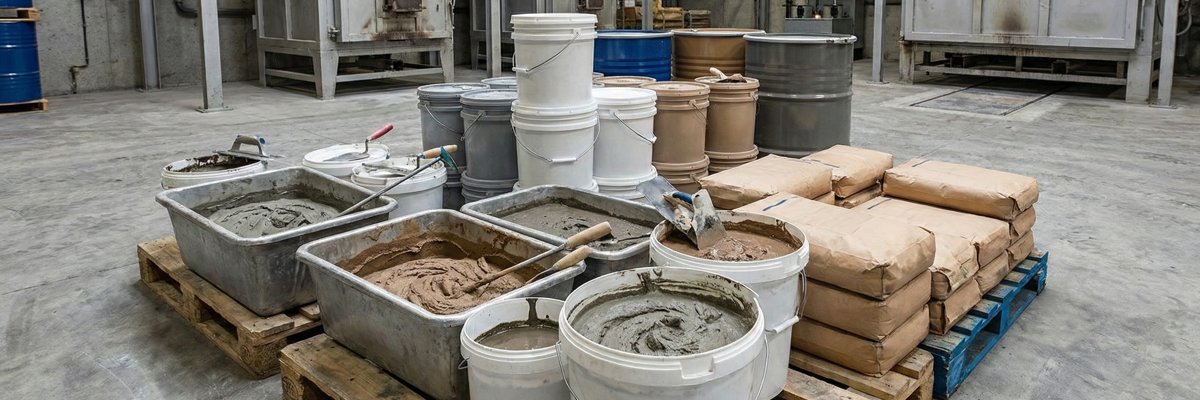
MORTARS & BINDERS

Refractory Mortars & Binders

Premium refractory mortars engineered for high-temperature bricklaying and jointing applications up to 1800°C, serving steel, cement, glass, and petrochemical industries worldwide.

Temperature Range 1100-1800°C
Certification ASTM C860
Export Markets 30+ Countries
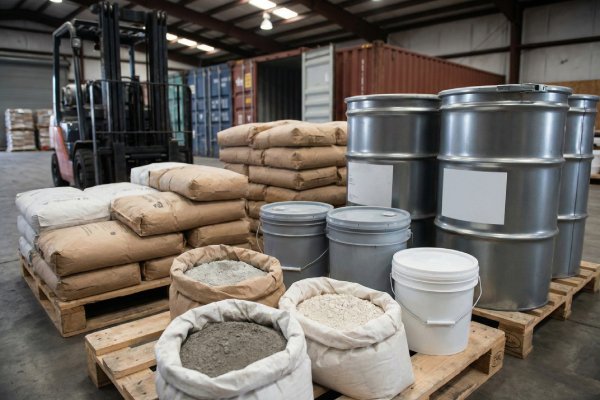
Refractory Mortars and Binders
PRODUCT OVERVIEW

Essential Bonding Solutions for Refractory Installations

Refractory mortars and binders are specialized high-temperature bonding materials designed to join refractory bricks and shapes in furnace, kiln, and vessel linings. These critical installation materials must match the thermal, chemical, and mechanical properties of the surrounding refractory bricks while providing strong, durable joints that withstand thermal cycling, chemical attack, and mechanical stress.

The selection of appropriate mortar is as critical as brick selection for lining performance. A properly formulated mortar creates joints with similar refractoriness, thermal expansion coefficient (6-8 × 10⁻⁶/°C), and chemical stability as the bricks, ensuring the lining behaves as a monolithic structure rather than individual units. Poor mortar selection leads to premature joint failure, brick displacement, and overall lining degradation.

Our comprehensive range includes high-alumina cement (CAC) mortars with 50-80% Al₂O₃ content providing hydraulic setting and excellent refractoriness up to 1750°C, air-setting formulations developing strength at ambient temperature through hydraulic reactions, heat-setting compositions achieving ceramic bonds during initial heat-up at 800-1200°C, phosphate-bonded mortars offering rapid strength development through chemical reaction, acid-resistant sodium silicate-based systems for chemical processing environments, and plastic pre-mixed mortars providing convenient ready-to-use consistency.

All mortars are manufactured under certified quality management systems, comply with ASTM C860 testing standards, and are available with complete technical documentation including mill test certificates, installation guidelines, and compatibility recommendations for various brick types. We provide customized formulations matching specific brick compositions and operating conditions for optimal lining performance.

High-Temperature Stability

Maintains bond strength up to 1800°C with ceramic bonding formation.

Matched Thermal Expansion

Compatible expansion coefficients prevent joint stress and cracking.

ASTM C860 Certified

Compliant with international refractory mortar standards.

Custom Formulations Available

Tailored compositions matching specific brick and application requirements.

Quick Specifications
  • Temperature Range: 1100-1800°C
  • Al₂O₃ Content: 40-80%
  • Joint Thickness: 2-5 mm
  • Coverage (3mm): 35-45 kg/m²
  • Setting Time: 6-24 hours
  • Crushing Strength: 20-60 MPa
  • Packaging: 25 kg bags
  • MOQ: 500 kg - 1 MT
Request TDS
PRODUCT RANGE

Comprehensive Mortar & Binder Portfolio

We offer a complete range of refractory mortars engineered for specific brick types, installation methods, and operating conditions.

Refractory Mortars and Binders Range

Air-Setting Mortars

Hydraulic-setting mortars based on calcium aluminate cement (CAC) developing strength at ambient temperature through hydration reactions. Ready for heat-up after 24-48 hours drying at 100-150°C.

  • Temperature: 1100-1450°C
  • CAC Content: 15-25%, Al₂O₃: 40-55%
  • Setting: 12-24 hours at 20°C
  • Cold Strength: 20-30 MPa at 24h
  • Applications: General purpose bricklaying, moderate temperature zones

Heat-Setting Mortars

Recommended

Low-cement mortars developing primary strength through ceramic bonding during initial heat-up. Minimal binder content (2-5% CAC) with fine refractory aggregates matching brick composition for superior high-temperature performance.

  • Temperature: 1400-1800°C
  • CAC: 2-5%, Al₂O₃: 50-75%
  • Ceramic bonding: 800-1200°C
  • Hot MOR: 40-70 MPa at 1400°C
  • Applications: High-temperature zones, thermal cycling areas

High-Alumina Cement (CAC)

Premium calcium aluminate cement with 50-80% Al₂O₃ content providing excellent high-temperature performance, rapid strength development, and superior refractoriness up to 1750°C for demanding applications.

  • Temperature: 1400-1750°C
  • Al₂O₃: 50-80% (CAC-50/70/80)
  • Rapid hardening: 70% strength in 24h
  • Crushing Strength: 40-60 MPa
  • Applications: High-alumina brick laying, premium installations

Phosphate-Bonded Mortars

Chemical-setting mortars using phosphoric acid or aluminum phosphate binders providing rapid strength development, excellent refractoriness, and strong bonding for high-alumina and basic refractory bricks.

  • Temperature: 1500-1700°C
  • Phosphate bond: H₃PO₄ or Al-phosphate
  • Setting: 2-6 hours at 20°C
  • Rapid strength: 30-50 MPa at 6h
  • Applications: Fast turnaround projects, hot repairs, basic bricks

Acid-Resistant Mortars

Sodium silicate-based mortars providing excellent resistance to acidic environments in chemical processing, petrochemical, and fertilizer industries. Designed specifically for acid-resistant brick installations.

  • Temperature: 1100-1300°C
  • Binder: Sodium silicate (Na₂SiO₃)
  • Acid resistance: pH 1-6
  • Chemical curing: 24-48 hours
  • Applications: Acid tanks, pickling lines, chemical reactors

Plastic Pre-Mixed Mortars

Ready-to-use plastic consistency mortars pre-mixed to optimal water content, eliminating field mixing variations. Excellent workability, consistent quality, and convenient application for small-scale projects and repairs.

  • Temperature: 1200-1550°C
  • Ready-to-use: No mixing required
  • Plastic consistency: Immediate use
  • Shelf life: 3-6 months in sealed bags
  • Applications: Small repairs, patches, convenience installations
TECHNICAL DATA

Comprehensive Technical Specifications

Detailed physical and chemical properties for all mortar types tested according to ASTM C860 standards.

Property Unit Air-Setting Heat-Setting CAC-70 Phosphate Acid-Resistant
Maximum Service Temperature °C 1100-1450 1400-1800 1450-1650 1500-1700 1100-1300
Al₂O₃ Content % 40-55 50-75 70-75 60-80 40-50
SiO₂ Content % 35-50 20-40 20-25 10-20 35-45
Binder Type - CAC 15-25% CAC 2-5% CAC 70% Al₂O₃ H₃PO₄ / Al-P Na₂SiO₃
Setting Time at 20°C hours 12-24 800-1200°C* 6-12 2-6 24-48
Water for Mixing % by weight 18-22 16-20 18-22 15-18 12-16
Cold Crushing Strength (24h) MPa 20-30 10-20 40-60 30-50 25-40
Hot MOR at 1400°C MPa 2-4 40-70 5-10 15-30 N/A
Joint Thickness Recommended mm 3-5 2-3 3-5 2-4 3-6
Coverage (3mm joint) kg/m² 35-45 30-40 40-50 35-45 40-55
Shelf Life (sealed) months 9-12 9-12 6-9 9-12 12-18
Testing Standards: All properties tested according to ASTM C860 (refractory mortar specification), ASTM C198 (modulus of rupture), ASTM C133 (cold crushing strength), ASTM C874 (rotary mixer preparation), and ASTM C1672 (bond strength).
Quality Assurance: Every batch tested for consistency. Mill test certificates, TDS, and MSDS provided. Third-party inspection available through SGS, Bureau Veritas, Intertek for export shipments.

Note: * Heat-setting mortars develop primary strength through ceramic bonding during initial heat-up at 800-1200°C, not at ambient temperature. Controlled heating rate of 25-50°C/hour required up to 600°C to prevent steam pressure buildup and joint damage.

APPLICATIONS

Industries & Applications

Our refractory mortars serve critical bonding applications across multiple high-temperature industries worldwide.

Steel & Metallurgy

Blast furnace linings, ladle bricks, tundish maintenance, BOF/EAF refractory installations, and hot metal transfer systems requiring high-strength bonding and slag resistance.

Cement & Lime

Rotary kiln linings, preheater towers, cooler sections, calciner refractories, and burner pipe installations requiring thermal shock resistance and alkali attack protection.

Glass Industry

Glass tank construction, regenerator checkerwork, feeder channels, forehearths, and annealing lehr linings requiring precise joint thickness and alkali vapor resistance.

Petrochemical

Ethylene cracker furnaces, hydrogen reformers, FCC catalyst regenerators, acid-resistant brick installations, and process heater linings requiring chemical stability.

Power Generation

Boiler wall linings, ash handling systems, coal-fired furnaces, biomass combustors, and waste-to-energy incinerators requiring thermal insulation and corrosion protection.

Foundry & Casting

Induction furnace linings, ladle maintenance, crucible installations, tundish repairs, and holding furnace refractories requiring rapid turnaround solutions.

Chemical Processing

Acid tanks, pickling lines, chemical reactors, sulfuric acid plants, fertilizer production equipment, and corrosive environment installations using acid-resistant mortars.

Incinerators & Waste

Municipal waste incinerators, hazardous waste combustors, medical waste burners, rotary kiln incinerators, and flue gas handling systems requiring chemical attack resistance.

Specific Applications:

  • Refractory brick laying (fireclay, high-alumina, silica, magnesia)
  • Acid-resistant brick installations in chemical plants
  • Furnace and kiln construction projects
  • Rotary kiln lining installations and repairs
  • Boiler and incinerator wall linings
  • Steel ladle and tundish maintenance
  • Glass tank regenerator construction
  • Petrochemical reformer tube linings
  • Hot repair and maintenance applications
  • Precast refractory shape assembly
  • Emergency patching and crack sealing
  • Joint filling in expansion joint systems
KEY FEATURES

Why Choose Our Refractory Mortars?

Quality-assured bonding solutions engineered for reliable performance in the most demanding high-temperature environments.

Certified Quality System

Manufactured under certified quality management systems ensuring consistent batch-to-batch performance. Every production lot tested for chemical composition, setting time, and strength development according to ASTM C860 protocols. Complete traceability from raw materials through packaging with mill test certificates provided for every shipment.

Superior High-Temperature Performance

Engineered to maintain bond strength and structural integrity at temperatures up to 1800°C. Heat-setting formulations develop ceramic bonds during service, achieving hot modulus of rupture values of 40-70 MPa at 1400°C. Matched thermal expansion coefficients (6-8 × 10⁻⁶/°C) prevent differential movement and joint cracking during thermal cycling.

Excellent Thermal Shock Resistance

Formulated with carefully selected aggregates and binders providing similar thermal expansion behavior as surrounding refractory bricks. Withstands rapid temperature fluctuations (100-300°C/minute) without cracking or spalling. Ideal for applications with frequent start-stop cycles such as batch furnaces, boilers, and intermittently operated kilns.

Chemical Compatibility & Stability

Formulations specifically designed to match the chemical nature of bonded bricks - acidic mortars for fireclay/silica bricks, neutral compositions for high-alumina applications, and basic systems for magnesia-chrome installations. Resists attack from process gases, molten slags, alkali vapors, and corrosive atmospheres specific to each industrial application.

Customizable Formulations Available

Our technical team can develop custom mortar formulations matching specific brick compositions, operating temperatures, and installation requirements. Services include mortar-brick compatibility testing, joint thickness optimization, setting time adjustment for field conditions, and specialized binder selection for unique chemical environments. Minimum order quantities apply for custom formulations.

Global Export & Technical Support

Exported to 30+ countries with complete export documentation, quality certificates, and technical data sheets. Packaging in moisture-proof 25 kg bags ensures product integrity during international shipping. Pre-shipment inspection available through SGS, Bureau Veritas, Intertek. Technical support for installation guidelines, mixing procedures, drying schedules, and heat-up protocols.

FREQUENTLY ASKED QUESTIONS

Refractory Mortars FAQ

Common questions about refractory mortar selection, installation, and performance.

Air-setting mortars develop strength through hydraulic reaction at ambient temperature (12-24 hours setting time) and are ready for heating after 24-48 hours drying. They use calcium aluminate cement (CAC) as the primary binder and achieve 20-40 MPa cold crushing strength.

Heat-setting mortars develop strength primarily during the initial heat-up when ceramic bonding occurs at 800-1200°C, requiring controlled heating rates (25-50°C/hour up to 600°C). They use fine refractory aggregates with minimal binder content (2-5% CAC) and achieve 40-70 MPa hot modulus of rupture at service temperature.

Air-setting mortars are preferred for general bricklaying with long installation times, while heat-setting mortars are used for high-temperature zones where ceramic bonding provides superior refractoriness (up to 1800°C).

For standard 3mm joint thickness (optimal for most refractory bricks), typical mortar consumption is 35-45 kg per square meter of wall surface. Thinner joints (2mm) require 25-30 kg/m², while thicker joints (5mm) need 50-60 kg/m².

Factors affecting consumption include brick dimensions (smaller bricks create more joints), joint thickness consistency, wastage (typically 5-10%), and application method (troweling vs. extrusion).

For a 50m² furnace wall with 3mm joints using standard 230×114×65mm bricks, expect to use approximately 2,000-2,250 kg of mortar. Always order 10-15% extra to account for mixing losses, joint variations, and filling irregular surfaces.

High-alumina cement (HAC or CAC - Calcium Aluminate Cement) is a rapid-hardening hydraulic cement containing 40-80% Al₂O₃, significantly higher than Portland cement's 5% Al₂O₃. In refractory mortars, CAC provides excellent high-temperature performance with a melting point of 1400-1750°C depending on alumina content.

CAC mortars provide:

  • Rapid strength development (70% of final strength in 24 hours)
  • Excellent thermal shock resistance due to similar thermal expansion as refractory bricks (6-8 × 10⁻⁶/°C)
  • Maintained strength at elevated temperatures up to 1000-1300°C
  • Resistance to chemical attack from slags and process gases

Common grades include CAC-50 (50-55% Al₂O₃, up to 1450°C), CAC-70 (70-75% Al₂O₃, up to 1650°C), and CAC-80 (80% Al₂O₃, up to 1750°C). CAC is the most widely used binder for refractory mortars globally due to its unique combination of hydraulic setting, high refractoriness, and chemical stability.

Yes, specialized hot repair mortars (plastic refractories and hot patching compounds) can be applied to furnace surfaces at temperatures of 800-1400°C while the unit remains in operation.

These mortars:

  • Contain heat-resistant binders (phosphate or colloidal silica)
  • Feature fine refractory aggregates and chemical setting agents that activate at elevated temperatures
  • Are applied by hand troweling or pneumatic gunning in 10-50mm thick layers
  • Adhere to hot surfaces through rapid dehydration and sintering
  • Develop working strength within 30-120 minutes
  • Cure fully during continued operation

They are ideal for emergency repairs of spalling areas, crack sealing in hot zones, extending campaign life of damaged linings, and avoiding costly shutdowns. However, hot repairs are temporary solutions; permanent repairs require cold rebuilding during scheduled maintenance shutdowns.

Refractory mortars have a typical shelf life of 6-12 months from manufacturing date when stored properly in sealed, moisture-proof bags. High-alumina cement-based mortars are particularly sensitive to moisture absorption, which causes pre-hydration and loss of binding properties.

Proper storage requires:

  • Keeping bags on pallets off direct ground contact
  • Storing in dry, covered warehouses with <60% relative humidity
  • Maintaining cool temperatures (15-25°C, avoiding >35°C)
  • Keeping original sealed packaging intact until use
  • Implementing first-in-first-out inventory rotation
  • Avoiding freezing temperatures for phosphate-bonded mortars

Signs of degraded mortar include lumping or hardening in the bag, extended setting time (>36 hours), reduced strength after setting, and difficulty achieving proper consistency.

For long-term storage beyond 12 months, perform trial batches to verify setting time and strength before large-scale use.

Refractory mortars are tested and certified according to ASTM C860 (Standard Specification for Refractory Mortar) which covers classification, testing, and acceptance criteria.

Key testing standards:

  • ASTM C860 - Mortar classification and properties
  • ASTM C198 - Modulus of rupture by cold crushing
  • ASTM C133 - Cold crushing strength of dried specimens
  • ASTM C874 - Rotary mixer for mortar preparation
  • ASTM C1672 - Bond strength of refractory mortar
  • ISO 1927 - International standard for refractory mortars

Quality certifications:

  • ISO 9001:2015 - Quality management for production
  • ISO 14001:2015 - Environmental management
  • CE marking - European conformity for export markets

Manufacturers should provide mill test certificates (MTC) with chemical analysis and physical properties, technical data sheets (TDS) with application guidelines, and material safety data sheets (MSDS) for safe handling. Third-party inspection available through SGS, Bureau Veritas, and Intertek for export shipments.

RELATED PRODUCTS

Complete Your Refractory System

Explore complementary products for comprehensive refractory installations.

Fire Bricks

Fireclay and high-alumina bricks for general furnace linings requiring mortar bonding.

Learn More
Refractory Castables

Monolithic alternatives to brick/mortar systems for complex shapes and rapid installation.

Learn More
Coatings & Repair Materials

Hot repair compounds and protective coatings for maintenance and emergency fixes.

Learn More
Gunning & Ramming Mixes

Pneumatically applied and hand-rammed unshaped refractories for repairs and linings.

Learn More

Need Expert Mortar Selection Guidance?

Our technical team can recommend the optimal mortar formulation matching your specific brick type, operating temperature, and installation requirements. Request technical consultation today.