MONOLITHIC REFRACTORIES

Refractory Castables

Premium monolithic refractory castables engineered for versatile high-temperature applications up to 1800°C. Comprehensive range from conventional to no-cement formulations in alumina grades 40-90% Al₂O₃ per ASTM C401 and C862, serving steel, cement, glass, and petrochemical industries worldwide.

Temperature Range 1200-1800°C
Certification ISO 9001:2015
Export 30+ Countries
Refractory Castables
Product Overview

Versatile Monolithic Refractory Solutions

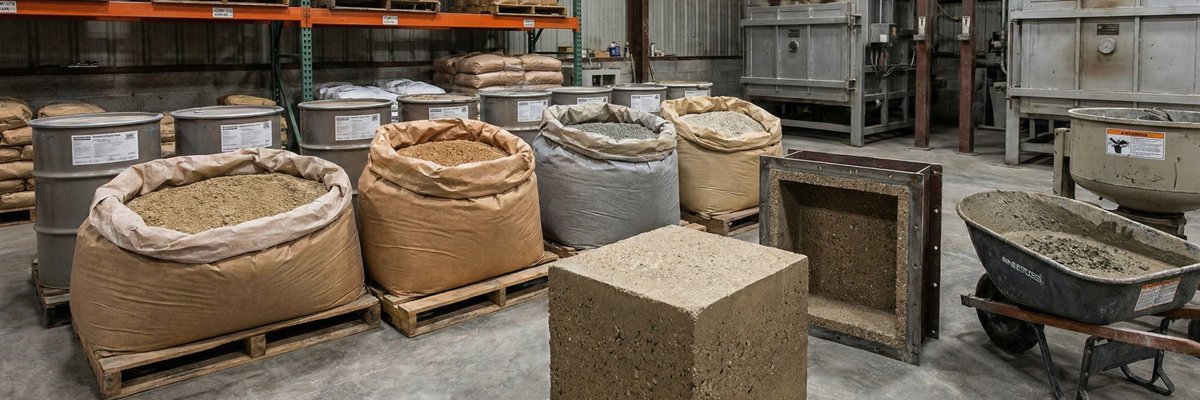
Refractory castables are hydraulically-bonded monolithic refractories supplied as dry mixes requiring only water addition for installation, offering unparalleled versatility for complex geometries, rapid installation, and cost-effective refractory solutions across diverse industrial applications. Unlike pre-formed refractory bricks requiring precise masonry skills and mortar joints (potential failure points), castables form seamless monolithic linings eliminating joint weaknesses, accommodating irregular shapes and penetrations, and enabling faster installation with lower labor costs. Modern castable technology has revolutionized refractory engineering through sophisticated formulations utilizing optimized particle packing theory, advanced bonding systems (low-cement, ultra-low cement, no-cement), specialized additives (dispersants, accelerators, fibers), and engineered aggregates achieving performance rivaling and often exceeding traditional brick linings in critical high-temperature applications.

Our comprehensive castable portfolio spans the complete technology spectrum: Conventional castables (15-25% CaO cement basis) for general purpose applications offering economical solutions with extended working time; Low-cement castables (4-8% CaO) delivering superior hot strength and thermal shock resistance for demanding environments; Ultra-low cement castables (1-3% CaO) providing exceptional high-temperature properties and chemical resistance for critical applications; No-cement castables (<1% CaO) utilizing alternative bonding systems (colloidal silica, alumina sol, hydratable alumina) for maximum refractoriness and corrosion resistance; Insulating castables combining lightweight aggregates with hydraulic bonds for superior thermal insulation; and Self-flowing castables engineered for installation without vibration in complex geometries. Each category available in multiple alumina grades (40%, 50%, 60%, 70%, 80%, 90% Al₂O₃) optimized for specific temperature ranges (1200°C to 1800°C) and application requirements per ASTM C401 and C862 specifications.

RefractorySource partners with ISO 9001:2015 certified manufacturers utilizing state-of-the-art production facilities with computerized batching systems ensuring ±0.5% composition accuracy, advanced aggregate processing (crushing, sizing, calcining), and rigorous quality control testing per ASTM C862, C133, C583, C704 standards. All castables undergo comprehensive performance verification including chemical analysis (XRF spectroscopy), particle size distribution analysis, physical properties testing at 110°C, 1000°C, 1400°C, and maximum use temperature, workability evaluation (flow value, working time), and setting characteristic determination. Complete technical support includes material selection consulting, mixing water optimization, installation procedure development, curing schedule specification, heat-up protocol design, and failure analysis services. Custom formulations available for specialized applications (abrasion resistance, thermal shock, chemical attack) with 4-6 week development cycles. Expert installation supervision and training ensures optimal field performance, proper mixing procedures, adequate consolidation, and appropriate curing practices maximizing service life and minimizing premature failures.

Design Flexibility

Accommodates complex geometries, irregular shapes, and numerous penetrations impossible with brick linings. Seamless monolithic construction eliminates joint weaknesses.

Rapid Installation

Faster installation than brick masonry (40-60% time reduction). Lower labor costs and simpler skills requirements enable efficient large-scale installations.

Superior Performance

Low-cement and ultra-low cement formulations deliver exceptional hot strength, thermal shock resistance, and chemical stability matching premium brick performance.

Comprehensive Support

Complete technical services including material selection, installation procedures, curing schedules, heat-up protocols, and on-site supervision ensuring optimal results.

Quick Specifications
  • Temperature Range:
    1200-1800°C (grade dependent)
  • Alumina Content:
    40-90% Al₂O₃ (multiple grades)
  • Cement Content:
    Conventional 15-25%, Low 4-8%, Ultra-low 1-3%
  • Water Requirement:
    5-18% by weight (type dependent)
  • Standards:
    ASTM C862, C401, ISO 9001:2015
  • Working Time:
    30 min - 4 hours (formulation dependent)
  • Packaging:
    25kg bags, 1-ton bulk bags, loose bulk
Product Variants

Comprehensive Castable Technology Range

From conventional to advanced no-cement formulations for all industrial applications

Refractory Castables Product Range

Conventional Castables

Traditional hydraulic-bonded castables with 15-25% CaO cement content. Economical general-purpose solutions with extended working time and simple installation requirements.

  • Temperature: 1200-1500°C
  • Cement Content: 15-25% CaO
  • Water: 13-18% by weight
  • Working Time: 3-4 hours

Low-Cement Castables (LCC)

Most Popular

Advanced formulations with 4-8% CaO cement delivering superior hot strength, thermal shock resistance, and chemical stability for demanding industrial applications.

  • Temperature: 1400-1700°C
  • Cement Content: 4-8% CaO
  • Water: 9-12% by weight
  • Working Time: 45-90 minutes

Ultra-Low Cement (ULCC)

Premium

Premium formulations with 1-3% CaO cement providing exceptional high-temperature properties and maximum hot strength for critical applications.

  • Temperature: 1500-1750°C
  • Cement Content: 1-3% CaO
  • Water: 6-9% by weight
  • Working Time: 30-60 minutes

No-Cement Castables

Advanced bonding systems (colloidal silica, alumina sol, hydratable alumina) eliminating calcium aluminate for maximum refractoriness and corrosion resistance.

  • Temperature: 1600-1800°C
  • Cement Content: <1% CaO
  • Water: 5-7% by weight
  • Applications: Steel ladles, tundishes

Insulating Castables

Lightweight formulations utilizing insulating aggregates (expanded clay, perlite, vermiculite) for superior thermal insulation and energy efficiency.

  • Temperature: 900-1500°C
  • Bulk Density: 0.6-1.4 g/cm³
  • Thermal Conductivity: 0.2-0.6 W/m·K
  • Applications: Backup linings, insulation layers

Self-Flowing Castables

Engineered for installation without vibration using sophisticated particle packing and dispersant technology. Ideal for complex geometries and rapid installation.

  • Temperature: 1300-1700°C
  • No vibration required
  • Flow value: 130-180mm
  • Working Time: 30-45 minutes

Abrasion Resistant Castables

Specialized formulations incorporating hard aggregates (sintered bauxite, silicon carbide, brown fused alumina) for superior wear resistance in severe conditions.

  • Temperature: 1300-1600°C
  • Abrasion Index: <8 cm³ (ASTM C704)
  • Crushing Strength: 80-120 MPa
  • Applications: Cyclones, chutes, kiln inlets

High-Alumina Castables (80-90%)

Premium high-alumina formulations (80-90% Al₂O₃) for extreme temperature applications requiring maximum refractoriness and chemical stability.

  • Temperature: 1600-1800°C
  • Al₂O₃ Content: 80-90%
  • RUL: 1650-1750°C
  • Applications: Steel ladles, tundishes, furnaces
FAQ

Frequently Asked Questions

The primary difference lies in CaO cement content affecting performance and installation. Conventional castables (15-25% cement) offer economical general-purpose solutions with extended working time (3-4 hours), higher water requirement (13-18%), good mechanical strength, but limited hot properties due to calcium aluminate conversion reducing strength above 1000°C. Low-cement castables (4-8% cement) deliver superior hot strength, thermal shock resistance, and chemical stability with moderate working time (45-90 minutes) and water requirement (9-12%), making them the most popular choice balancing performance and cost. Ultra-low cement castables (1-3% cement) provide exceptional high-temperature properties, maximum hot strength retention, minimal thermal shrinkage, excellent thermal shock resistance, and superior slag/chemical resistance, but require precise mixing, shorter working time (30-60 minutes), lower water (6-9%), and cost 30-50% more than LCC formulations.

Proper mixing requires forced-action pan mixer (planetary or counter-current design) avoiding drum/paddle mixers which don't achieve adequate dispersion. Add dry material to mixer first, start mixing, then add 80-85% water gradually over 2-3 minutes, mix vigorously for 3-5 minutes until uniform consistency, add remaining water carefully to achieve target flow (conventional: 160-180mm, LCC: 130-160mm, ULCC: 110-140mm per ASTM C860), and mix final 1-2 minutes. Installation requires proper formwork (rigid, leak-proof, oiled/waxed for easy removal), anchor system (V-anchors, Y-anchors, hex mesh based on lining thickness and temperature), vibration for conventional/LCC castables (internal poker vibrators, 50-60Hz, 30-60 second intervals, avoid over-vibration causing segregation), pour in lifts not exceeding 300-500mm thickness, compact thoroughly eliminating air pockets especially around anchors, finish surface smooth, and cure per manufacturer specifications (typically moist curing 16-24 hours, air curing 24-48 hours before controlled heat-up).

Curing develops green strength through cement hydration requiring controlled moisture and temperature. Initial curing maintains installation moisture for 16-24 hours using plastic sheeting or wet burlap (conventional castables benefit most from moist curing, LCC/ULCC less sensitive), followed by air curing 24-48 hours allowing surface drying while interior hydration continues. Heat-up (dry-out) removes moisture preventing explosive spalling through controlled temperature increase: 25-200°C at 10-25°C/hour (critical moisture evaporation range requiring slowest rate), 200-600°C at 25-50°C/hour (continued dehydration and organic burnout), 600-1000°C at 50-75°C/hour (sintering begins), and 1000°C to service temperature at 75-100°C/hour. Hold temperatures at 110°C, 300°C, and 600°C for 2-4 hours each allowing moisture vapor escape. Faster heat-up risks steam pressure buildup causing spalling, cracks, or explosive failure especially in thick sections (>150mm). Monitor for steam emission from expansion joints - continued steaming indicates insufficient drying requiring extended hold times. First-time heat-up represents critical installation phase determining long-term lining performance and service life.

Choose castables for complex geometries (curved surfaces, irregular shapes, numerous penetrations), rapid installation requirements (40-60% faster than bricklaying), seamless monolithic construction eliminating joint weaknesses, areas requiring custom shapes or frequent repairs, and applications where skilled brick masons are unavailable or costly. Castables excel in furnace roofs, burner blocks, cyclones, complex ductwork, and large-surface backup linings. Choose fire bricks for applications requiring maximum mechanical strength and load-bearing capacity (kiln cars, checkers), severe abrasion environments where dense brick outperforms castables, installations demanding easy localized repair (replace individual bricks versus breaking out castable sections), traditional designs with proven long service life, and when installation schedule allows extended brick masonry time. Bricks offer superior resistance to direct flame impingement and mechanical impact. Optimal designs often combine both: brick hot face for mechanical/chemical resistance with castable backup for thermal insulation and simplified construction. Modern high-performance LCC/ULCC castables increasingly replace bricks in many applications delivering comparable or superior refractory properties with installation advantages.

Anchoring systems secure castable linings to steel shell preventing sagging, spalling, or complete lining failure. V-anchors (most common, 100-300mm spacing depending on thickness and orientation) suit flat/slightly curved surfaces for linings 75-200mm thick. Y-anchors provide additional support for overhead applications and thicker linings 150-300mm. Hex mesh (stainless steel or Nichrome wire) reinforces large flat areas and provides distributed anchoring for thin linings 25-75mm. Stud welding systems offer rapid installation for moderate temperatures. Ceramic fiber modules with stainless steel clips serve backup insulation 50-100mm. Material selection considers service temperature: 304 stainless steel to 900°C, 310 stainless to 1100°C, 330 stainless to 1150°C, high-nickel alloys (Inconel, Hastelloy) to 1250°C, and refractory metal anchors (molybdenum, ceramic) above 1250°C. Anchor spacing and size calculations account for lining weight, thermal expansion forces, vibration, and safety factors typically 3:1 to 4:1. Inadequate anchoring represents primary cause of premature castable lining failure - proper anchor design and installation critical for achieving design service life.

Castable selection requires analyzing service conditions and application requirements. Consider maximum service temperature (select castable rated 50-100°C above continuous operating temperature providing safety margin for temperature excursions), chemical environment (acidic slags require high-alumina or silica-based castables, basic slags demand magnesia or doloma formulations, neutral atmospheres suit aluminosilicate compositions), mechanical requirements (impact, abrasion, or load-bearing applications need dense castables with hard aggregates like sintered bauxite or silicon carbide), thermal cycling severity (frequent cycling demands low-cement formulations with superior thermal shock resistance), and installation constraints (limited working time favors conventional castables, complex geometries benefit from self-flowing types, overhead/vertical installations require appropriate consistency). For steel ladles/tundishes, specify ultra-low or no-cement castables (80-90% Al₂O₃) resisting steel and slag erosion. Cement rotary kilns need abrasion-resistant grades withstanding mechanical wear. Petrochemical furnaces require thermal shock resistant LCC formulations. Backup insulation employs lightweight insulating castables (0.6-1.4 g/cm³ density). Consult technical data sheets verifying key properties: refractoriness under load (RUL), cold and hot crushing strength, permanent linear change, thermal conductivity, and chemical composition. Request installation guidelines, curing schedules, and heat-up curves. Our application engineers provide complimentary material selection assistance considering your specific operating conditions.

Related Products

Complementary refractory products for complete lining systems

Refractory Mortars

High-temperature mortars and binders for brick laying and joint filling in combination lining systems.

Learn More

Precast Products

Factory-manufactured precast shapes for burner blocks, tap holes, and complex geometries.

Learn More

Gunning & Ramming

Application-specific mixes for hot repairs, emergency patching, and bottom lining construction.

Learn More

High-Alumina Bricks

Dense shaped refractories for areas requiring superior mechanical strength and slag resistance.

Learn More

Ready to Source Premium Castables?

Get expert consultation and competitive quotes for your monolithic refractory requirements. Our specialists provide complete technical support from material selection to installation supervision.