HIGH-PERFORMANCE BRICKS

High-Alumina Bricks

ASTM C401 certified high-alumina refractory bricks with 48-90% Al₂O₃ content, engineered for extreme temperatures up to 1800°C with superior refractoriness, thermal shock resistance, and chemical stability for demanding industrial applications.

Temperature Rating 1500-1800°C
Standard ASTM C401
Al₂O₃ Content 48-90%
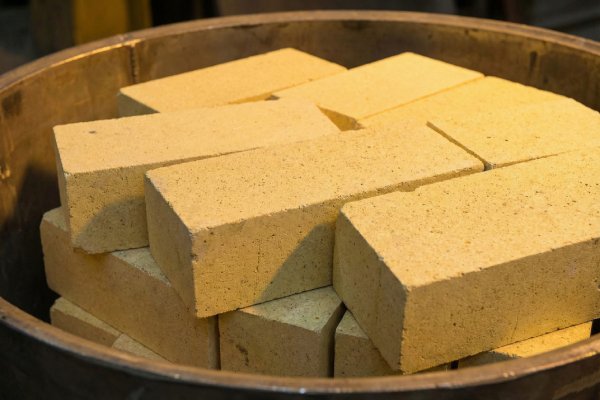
High Alumina Refractory Bricks

Product Overview

High-alumina bricks are premium refractory materials characterized by alumina (Al₂O₃) content ranging from 48% to 92%, significantly exceeding standard fireclay bricks. Manufactured from high-grade bauxite, calcined alumina, and kyanite through precise mixing, forming, and high-temperature firing at 1500-1700°C, these bricks deliver exceptional performance in the most demanding high-temperature industrial environments.

The superior properties of high-alumina bricks stem from their elevated alumina content, which provides enhanced refractoriness under load (RUL), improved mechanical strength, better thermal shock resistance, and excellent chemical stability against both acidic and basic environments. ASTM C401 standard classifies high-alumina bricks into five grades (Grade 50, 60, 70, 80, and 90) based on alumina content, each engineered for specific temperature ranges and application requirements.

Our high-alumina bricks meet rigorous international standards including ASTM C401, ISO 1109, and BIS IS:8. Manufacturing employs advanced techniques including isostatic pressing for uniform density, controlled particle size distribution for optimal packing, and precision-controlled kilns ensuring consistent quality. Each production batch undergoes comprehensive testing for chemical composition, bulk density, apparent porosity, cold crushing strength, and refractoriness under load. Complete mill test certificates, technical data sheets, and quality documentation accompany every export shipment.

Key Benefits

Superior Refractoriness

Exceptional performance at 1500-1800°C with RUL values up to 1600°C

Enhanced Mechanical Strength

Cold crushing strength 40-100 MPa, superior load-bearing capacity

Thermal Shock Resistance

Withstands rapid temperature changes during startup and shutdown cycles

Chemical Stability

Excellent resistance to acidic and moderate basic slag attack

Quick Specifications
  • Max Temperature: 1500-1800°C
  • Al₂O₃ Content: 48-92%
  • Bulk Density: 2.3-3.0 g/cm³
  • Porosity: 12-20%
  • Crushing Strength: 40-100 MPa
  • Standard: ASTM C401, ISO 1109

Available Grades & Types

Five ASTM C401 grades offering comprehensive solutions for diverse temperature ranges and application requirements

High Alumina Bricks Product Range

Grade 50 (48-55% Al₂O₃)

Entry-level high-alumina grade offering superior performance over fireclay at moderate cost. Ideal for general high-temperature applications requiring better refractoriness and strength.

  • Temperature: 1500-1550°C
  • RUL: 1450-1480°C at 0.2 MPa
  • Bulk Density: 2.3-2.5 g/cm³
  • Applications: Rotary kilns, glass tanks, boilers
Most Popular

Grade 60 (60-65% Al₂O₃)

Most widely used high-alumina grade balancing performance and cost. Excellent for cement kilns, steel ladles, and glass regenerators requiring 1550-1650°C capability.

  • Temperature: 1550-1650°C
  • RUL: 1500-1520°C at 0.2 MPa
  • Bulk Density: 2.4-2.6 g/cm³
  • Applications: Cement kilns, steel ladles, glass regenerators

Grade 70 (70-75% Al₂O₃)

Premium grade for demanding applications requiring enhanced mechanical strength and chemical resistance. Superior performance in aggressive chemical environments.

  • Temperature: 1650-1700°C
  • RUL: 1530-1550°C at 0.2 MPa
  • Bulk Density: 2.6-2.8 g/cm³
  • Applications: Blast furnace stacks, tundishes, reformers

Grade 80 (80-85% Al₂O₃)

Super duty grade delivering exceptional refractoriness and mechanical strength. Engineered for most severe conditions in steel and glass industries.

  • Temperature: 1700-1750°C
  • RUL: 1560-1580°C at 0.2 MPa
  • Bulk Density: 2.7-2.9 g/cm³
  • Applications: BOF/EAF converters, glass melters
Ultra Premium

Grade 90 (88-92% Al₂O₃)

Highest performance grade with maximum refractoriness and mechanical properties. For critical applications requiring ultimate temperature capability and chemical resistance.

  • Temperature: 1750-1800°C
  • RUL: 1580-1600°C at 0.2 MPa
  • Bulk Density: 2.8-3.0 g/cm³
  • Applications: High-end glass, specialty steel, petrochemical

Corundum Bricks (≥90% Al₂O₃)

Ultra-high alumina bricks manufactured from fused or sintered corundum (≥90-99% Al₂O₃). Maximum refractoriness and chemical stability for most demanding applications.

  • Temperature: 1800-1900°C
  • Al₂O₃: 90-99%, ultra-pure
  • Bulk Density: 2.9-3.2 g/cm³
  • Applications: Specialty glass, advanced ceramics, sapphire growth

Detailed Technical Specifications

Comprehensive ASTM C401 specifications across all high-alumina brick grades

Property Unit Grade 50 Grade 60 Grade 70 Grade 80 Grade 90
Al₂O₃ Content % 48-55 60-65 70-75 80-85 88-92
Refractoriness Under Load (RUL) °C 1450-1480 1500-1520 1530-1550 1560-1580 1580-1600
Maximum Service Temp °C 1500-1550 1550-1650 1650-1700 1700-1750 1750-1800
Bulk Density g/cm³ 2.3-2.5 2.4-2.6 2.6-2.8 2.7-2.9 2.8-3.0
Apparent Porosity % 18-22 16-20 14-18 13-17 12-16
Cold Crushing Strength MPa 40-60 50-70 60-80 70-90 80-100
SiO₂ Content % 38-45 30-38 20-28 12-18 6-10
Fe₂O₃ Content % ≤2.5 ≤2.0 ≤1.8 ≤1.5 ≤1.2
Permanent Linear Change % ±0.5 ±0.4 ±0.4 ±0.3 ±0.3
Thermal Conductivity W/m·K 1.5-1.8 1.7-2.0 1.9-2.2 2.0-2.3 2.2-2.5
Thermal Shock Resistance cycles 15-20 20-25 25-30 30-35 35-40
Testing Standards: All properties tested according to ASTM C20 (apparent porosity, bulk density), ASTM C133 (cold crushing strength), ASTM C16 (refractoriness under load), and ASTM C1171 (chemical analysis).
Quality Assurance: Every batch tested for compliance. Mill test certificates, TDS, and MSDS provided. Third-party inspection available through SGS, Bureau Veritas, Intertek.
APPLICATIONS

Industries & Use Cases

High-alumina bricks serve critical applications across demanding high-temperature industries

Steel & Metallurgy

Blast furnace stacks, steel ladles, tundishes, torpedo ladles, reheat furnaces, BOF/EAF converters (working linings), continuous casting components.

Learn More

Cement & Lime

Rotary kiln burning zones, transition areas, preheater cyclones, clinker coolers, lime kilns, vertical shaft kilns.

Learn More

Glass Manufacturing

Glass tank superstructures, regenerator checkers, forehearths, float glass sidewalls, container glass furnaces, fiber glass melters.

Learn More

Petrochemical

Ethylene crackers, catalytic reformers, hydrogen reformers, FCC regenerators, thermal crackers, fired heaters.

Learn More

Specific Applications by Grade

Grade 50-60 Applications:

  • Cement rotary kiln transition zones
  • Glass tank regenerator checkers
  • Steel ladle sidewalls
  • Boiler arch and sidewalls
  • Ceramic kilns (walls and crown)

Grade 70-90 Applications:

  • Blast furnace stacks (high-stress zones)
  • Tundish working linings
  • BOF/EAF converter working linings
  • Glass melter superstructures
  • Ethylene cracker radiant tubes
  • Hydrogen reformer tubes
WHY CHOOSE US

Key Features & Advantages

Extreme Temperature Performance

Grade-specific formulations deliver precise temperature capability from 1500°C to 1800°C. Superior refractoriness under load (RUL 1450-1600°C) ensures dimensional stability under combined thermal and mechanical stress. High pyrometric cone equivalent (PCE) values guarantee consistent performance in critical applications.

Enhanced Mechanical Strength

Cold crushing strength of 40-100 MPa (Grade 50-90) provides superior load-bearing capacity compared to fireclay bricks. Lower porosity (12-20%) and higher density (2.3-3.0 g/cm³) deliver improved structural integrity. Excellent creep resistance maintains shape stability at operating temperatures under mechanical loads.

Superior Thermal Shock Resistance

Engineered microstructure withstands 15-40 thermal shock cycles (water quench test) depending on grade. Critical for applications experiencing frequent temperature fluctuations during startup, shutdown, and process upsets. Controlled grain size distribution and optimal bonding minimize thermal stress cracking.

Balanced Chemical Stability

Amphoteric nature of alumina provides excellent resistance to both acidic slags (high SiO₂) and moderate resistance to basic slags (CaO/MgO). Grade 60-70 optimal for neutral environments, Grade 80-90 for improved basic slag resistance. Minimal alkali reaction reduces structural degradation in cement kiln and glass furnace applications.

ASTM C401 Certified Quality

Full compliance with ASTM C401 standard specifications. ISO 9001:2015 certified manufacturing ensures consistent quality batch-to-batch. Comprehensive testing including chemical analysis (ASTM C1171), RUL (ASTM C16), crushing strength (ASTM C133), porosity and density (ASTM C20). Complete mill test certificates, TDS, MSDS documentation.

Global Export Excellence

Serving 30+ countries with proven export experience. Expert containerized packaging with wooden pallets, steel strapping, moisture protection. Complete export documentation: commercial invoices, packing lists, certificates of origin, bills of lading. FOB, CFR, CIF terms. 4-6 week lead times. Technical support for installation and application guidance.

FAQ

Frequently Asked Questions

Common questions about high-alumina bricks and their applications

High-alumina bricks are available in five ASTM C401 grades based on alumina (Al₂O₃) content: Grade 50 contains 48-55% Al₂O₃ and serves applications up to 1500-1550°C. Grade 60 with 60-65% Al₂O₃ is the most popular grade for temperatures up to 1650°C, widely used in cement kilns and steel ladles. Grade 70 (70-75% Al₂O₃) handles 1650-1700°C in blast furnace stacks and tundishes. Grade 80 (80-85% Al₂O₃) and Grade 90 (88-92% Al₂O₃) are super duty grades for maximum temperature capability up to 1750-1800°C in BOF converters and glass melters. Higher alumina content provides superior refractoriness, mechanical strength, and chemical resistance, but at increased cost.

High-alumina bricks differ significantly from fireclay bricks in composition and performance. Alumina content: High-alumina contains 48-90% Al₂O₃ versus fireclay's 38-45%. Temperature capability: High-alumina operates at 1500-1800°C compared to fireclay's 1200-1400°C. Mechanical strength: High-alumina achieves 40-100 MPa cold crushing strength versus fireclay's 25-40 MPa. Refractoriness under load: High-alumina demonstrates RUL of 1450-1600°C, fireclay only 1350-1400°C. Porosity: High-alumina shows lower porosity 12-20% versus fireclay's 18-24%, providing better density and slag resistance. Chemical stability: High-alumina resists both acidic and moderate basic slags, while fireclay primarily resists acidic environments. Cost: High-alumina costs 1.5-3 times more than fireclay but delivers 2-3 times longer service life in demanding applications, providing better total cost of ownership.

Steel industry is the largest consumer of high-alumina bricks, using Grade 60-80 in blast furnace stacks, steel ladles (Grade 60-70 sidewalls), tundish working linings (Grade 70-80), and torpedo ladles. Cement industry employs Grade 60-70 bricks extensively in rotary kiln burning zones experiencing 1400-1600°C temperatures and severe alkali/sulfur attack, as well as transition areas and preheater cyclones. Glass industry uses Grade 60-80 in regenerator checkers, glass tank superstructures, and forehearths where thermal cycling and chemical corrosion from molten glass and combustion products occur. Petrochemical refineries utilize Grade 70-90 in ethylene cracker radiant tubes, catalytic reformers, and hydrogen reformers operating above 1500°C with aggressive chemical environments. Each industry selects specific grades based on maximum operating temperature, chemical environment, thermal cycling frequency, and mechanical loads.

Refractoriness Under Load (RUL) measures a refractory brick's ability to resist deformation when subjected to combined thermal and mechanical loads, tested according to ASTM C16 standard at 0.2 MPa compressive stress. This property is critical because many applications involve both high temperatures and significant mechanical loads. High-alumina bricks achieve RUL values of 1450-1600°C depending on grade: Grade 50 shows 1450-1480°C, Grade 60 reaches 1500-1520°C, Grade 70 achieves 1530-1550°C, Grade 80 demonstrates 1560-1580°C, and Grade 90 attains 1580-1600°C. RUL is particularly important for blast furnace stacks supporting massive material columns, cement kiln burning zones under rotational stress, and glass tank checkers bearing regenerator weight. Higher RUL indicates better dimensional stability and longer service life under actual operating conditions. Select bricks with RUL exceeding maximum operating temperature by 100-150°C for safety margin.

Yes, high-alumina bricks demonstrate balanced chemical resistance due to the amphoteric nature of alumina (Al₂O₃), meaning they resist both acidic and basic chemical attacks. Against acidic slags (high SiO₂, Al₂O₃ content), high-alumina bricks show excellent resistance across all grades, making them suitable for glass furnaces and ceramic kilns. Against basic slags (high CaO/MgO content common in steelmaking), resistance improves with higher alumina content: Grade 50-60 provides moderate basic slag resistance suitable for steel ladle sidewalls, Grade 70-80 offers good resistance for tundish linings and light basic slag exposure, Grade 90 delivers very good basic slag resistance approaching dedicated basic refractories. However, for severe basic slag conditions like BOF/EAF converter slag lines or cement kiln coating zones, magnesia or magnesia-alumina spinel bricks often perform better. The optimal choice depends on specific slag composition, temperature, and exposure time. High-alumina bricks excel in neutral to slightly acidic/basic environments where their balanced properties provide versatility.

Proper installation following ASTM C1019 standards maximizes high-alumina brick performance and service life. Mortar selection: Use high-alumina mortars matching or exceeding brick grade (Grade 60 bricks require Grade 60 mortar) to prevent joint failure. Joint thickness: Maintain 2-3mm joints for optimal bond strength and minimal slag penetration. Expansion joints: Provide 10-12mm expansion joints per meter of lining length (higher than fireclay's 8-10mm) to accommodate greater thermal expansion of high-alumina materials. Heat-up schedule: Implement controlled heat-up at 50-100°C per hour rate to prevent thermal shock, with holds at 200°C, 600°C, and 1000°C for moisture and chemical water removal. Backup insulation: Install appropriate backup insulation (ceramic fiber or insulating castable) to reduce heat loss, lower shell temperatures, and improve energy efficiency. Anchoring: Design proper anchor systems accommodating thermal expansion while providing structural support. Pre-drying: Pre-dry linings at 100-200°C for 12-24 hours before service to develop mortar bond strength and remove residual moisture. These practices prevent premature failure and maximize return on investment.

Related Products

Complementary refractory solutions for complete system design

Fire Bricks

Standard fireclay bricks for moderate temperature applications where high-alumina performance not required.

Learn More

High-Alumina Mortars

Grade-matched mortars for high-alumina brick installation ensuring joint integrity and thermal stability.

Learn More

High-Alumina Castables

Monolithic high-alumina refractories for complex shapes and areas where brick installation impractical.

Learn More

Insulating Fire Bricks

Lightweight backup insulation for high-alumina hot face linings, reducing heat loss and energy costs.

Learn More

Need High-Alumina Bricks for Your Project?

Get expert technical consultation and customized quotations for your specific application. Our refractory engineers help you select the optimal grade, design proper linings, and ensure maximum performance and service life.