BRICKS

Fire Bricks

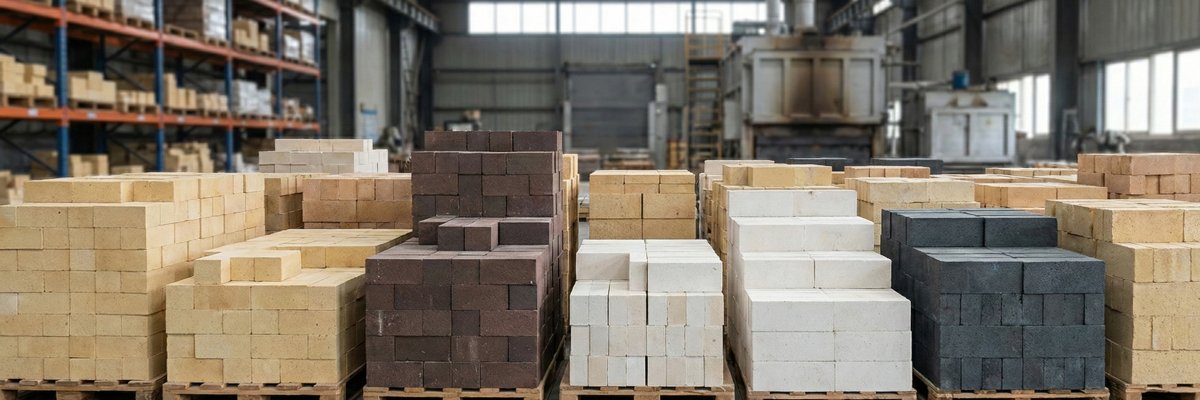
Premium fire bricks engineered for extreme temperatures up to 1800°C, serving steel, cement, glass, and petrochemical industries worldwide with proven reliability and performance.

Temperature Rating 1200-1800°C
Certification ISO 9001:2015
Export 30+ Countries
Fire Bricks Manufacturing

Product Overview

Fire bricks, also known as refractory bricks, are specialized ceramic materials designed to withstand extreme temperatures and harsh chemical environments in industrial applications. Manufactured from high-quality fire clay, bauxite, and other refractory raw materials, these bricks provide essential thermal insulation, structural support, and chemical resistance in furnaces, kilns, and other high-temperature equipment.

Our fire bricks are engineered to meet stringent international standards including ASTM C27 (fireclay bricks), ASTM C401 (high-alumina bricks), ASTM C92 (silica bricks), and BIS IS:8. With alumina content ranging from 38% to 90%, we offer comprehensive solutions for operating temperatures from 1200°C to 1800°C. Each brick undergoes rigorous quality testing including chemical analysis, refractoriness under load (RUL), cold crushing strength, bulk density, and porosity measurements to ensure consistent performance.

As a leading Indian exporter, we supply fire bricks to steel mills, cement plants, glass manufacturers, petrochemical facilities, and power plants across 30+ countries. Our manufacturing partners employ both traditional hand-molding and modern isostatic pressing techniques, ensuring optimal density and uniform properties. Every shipment includes complete mill test certificates, technical data sheets, and quality documentation, with third-party inspection available through SGS, Bureau Veritas, or Intertek.

Key Benefits

High-Temperature Stability

Maintains structural integrity and chemical stability at temperatures up to 1800°C

Extended Service Life

Exceptional durability delivering 2-5 years service life with proper maintenance

ISO-Certified Manufacturing

Certified production ensuring consistent quality and ASTM/BIS compliance

Custom Specifications Available

Tailored sizes, shapes, and chemical compositions for specific applications

Quick Specifications
  • Max Temperature: 1200-1800°C
  • Composition: 38-90% Al₂O₃
  • Bulk Density: 1.8-3.0 g/cm³
  • Porosity: 12-24%
  • Crushing Strength: 20-80 MPa
  • Applications: Steel, Cement, Glass, Petrochemical

Available Types & Grades

We offer a comprehensive range of fire brick types and grades, each engineered for specific temperature ranges and chemical environments to meet diverse industrial requirements.

Fire Bricks Product Range

Fireclay Bricks

Traditional ASTM C27 compliant fireclay bricks with 38-45% Al₂O₃ content. Economical choice for general furnace and kiln applications with moderate temperature requirements.

  • Temperature: 1300-1500°C
  • Al₂O₃: 38-45%, SiO₂: 50-58%
  • Bulk Density: 2.0-2.3 g/cm³
  • Applications: Boilers, chimneys, general furnaces

High-Alumina Bricks (48-60%)

ASTM C401 Grade 50-60 high-alumina bricks offering enhanced refractoriness and strength. Ideal for steel, cement, and glass industries requiring improved performance over fireclay.

  • Temperature: 1500-1650°C
  • Al₂O₃: 48-65%, Fe₂O₃: <2.0%
  • Bulk Density: 2.3-2.6 g/cm³
  • Applications: Cement kilns, steel ladles, glass regenerators

Super Duty High-Alumina (80-90%)

Premium ASTM C401 Grade 80-90 bricks with exceptional refractoriness under load. Engineered for most demanding applications in steel, cement, and glass industries.

  • Temperature: 1750-1800°C
  • Al₂O₃: 80-92%, Fe₂O₃: <1.5%
  • Bulk Density: 2.8-3.0 g/cm³
  • Applications: Blast furnaces, steel converters, glass melters

Silica Bricks

ASTM C92 compliant silica bricks with ≥93% SiO₂ content. Excellent load-bearing capacity at high temperatures with superior resistance to acidic slags.

  • Temperature: 1650-1700°C
  • SiO₂: 93-96%, Al₂O₃: <2%
  • Bulk Density: 1.80-1.92 g/cm³
  • Applications: Glass furnaces, coke ovens, soaking pits

Magnesia Bricks

ASTM C455 basic refractory bricks with 85-98% MgO. Outstanding resistance to basic slags and high temperatures, essential for steelmaking and cement production.

  • Temperature: 1650-1800°C
  • MgO: 85-98%, SiO₂: <5%
  • Bulk Density: 2.9-3.1 g/cm³
  • Applications: BOF/EAF converters, cement kilns

Chrome-Magnesia Bricks

Premium basic refractories combining MgO (50-70%) and Cr₂O₃ (12-30%). Superior thermal shock resistance and corrosion resistance for extreme conditions.

  • Temperature: 1700-1850°C
  • MgO: 50-70%, Cr₂O₃: 12-30%
  • Bulk Density: 3.0-3.3 g/cm³
  • Applications: Steel ladles, RH degassers, copper converters

Detailed Specifications

Comprehensive technical specifications for fire bricks across all grades

Property Unit Fireclay High-Alumina 60% High-Alumina 85% Silica Magnesia
Refractoriness Under Load (RUL) °C 1350-1400 1450-1500 1550-1600 1640-1680 1550-1650
Apparent Porosity % 18-24 16-20 12-16 20-24 14-20
Bulk Density g/cm³ 2.0-2.3 2.4-2.6 2.8-3.0 1.80-1.92 2.9-3.1
Cold Crushing Strength MPa 25-40 50-70 70-100 25-35 50-70
Al₂O₃ Content % 38-45 60-65 85-90 0.5-1.5 ≤5
SiO₂ Content % 50-58 30-38 8-12 93-96 ≤5
Fe₂O₃ Content % ≤2.5 ≤2.0 ≤1.5 ≤1.0 ≤3.0
Permanent Linear Change % ±0.5 ±0.4 ±0.3 +1.2-1.4 ±0.5
Thermal Conductivity W/m·K 1.0-1.3 1.5-2.0 2.0-2.5 1.3-1.5 3.5-4.5
Note: All specifications tested according to ASTM standards. Custom specifications available upon request. Contact our technical team for detailed material data sheets and application-specific recommendations.
APPLICATIONS

Industries & Use Cases

Fire bricks serve critical applications across multiple high-temperature industries, providing essential thermal protection and structural integrity

Steel & Metallurgy

Blast furnace hearths and stacks, coke ovens, steel ladles, tundishes, BOF/EAF converters, reheat furnaces, soaking pits.

Learn More

Cement & Lime

Rotary kiln burning zones, preheater towers, clinker coolers, lime kilns, vertical shaft kilns, calciner linings.

Learn More

Glass Manufacturing

Glass tank superstructure, regenerator checkers, forehearths, float glass bath walls, container glass furnaces.

Learn More

Petrochemical

Ethylene crackers, catalytic reformers, FCC units, hydrogen reformers, thermal crackers, fired heaters.

Learn More

Power & Energy

Boiler walls and floors, economizers, superheaters, coal-fired boilers, waste heat recovery units.

Learn More

Foundry & Casting

Cupola furnaces, induction furnace linings, ladle linings, holding furnaces, heat treatment furnaces.

Learn More

Incinerators & Waste

Municipal waste incinerators, hazardous waste treatment, medical waste disposal, rotary kiln incinerators.

Learn More

Ceramic & Pottery

Tunnel kilns, shuttle kilns, periodic kilns, ceramic tile production, sanitaryware firing.

Learn More

Specific Applications

  • Blast furnace hearth and stack linings
  • Rotary kiln burning zones and transition areas
  • Glass tank superstructure and regenerators
  • Steel ladle sidewalls and bottom linings
  • Coke oven combustion chambers
  • Boiler sidewalls and back walls
  • Incinerator combustion chambers and afterburners
  • Tundish working linings for continuous casting
  • Ethylene cracker radiant sections
  • Ceramic kiln sidewalls and crown
  • Soaking pit linings and covers
  • Chimney stack linings and flues
WHY CHOOSE US

Key Features & Benefits

Superior Quality Assurance

Certified manufacturing with rigorous quality control at every stage. Each batch undergoes complete chemical analysis, physical property testing, and dimensional inspection. Mill test certificates, TDS, and MSDS provided with every shipment. Third-party inspection available through SGS, Bureau Veritas, or Intertek.

Extreme Temperature Performance

Engineered to maintain structural integrity and chemical stability at temperatures up to 1800°C. Superior refractoriness under load (RUL) ensures consistent performance under actual operating conditions. Excellent thermal shock resistance withstands rapid temperature fluctuations during startup, shutdown, and process upsets.

Extended Service Life

Proven durability delivering 2-5 years service life in demanding applications. High-quality raw materials and optimized firing processes ensure exceptional mechanical strength and erosion resistance. Lower total cost of ownership through reduced downtime, maintenance costs, and replacement frequency compared to inferior products.

Chemical Stability

Engineered resistance to acidic, basic, and neutral slags depending on brick type. Magnesia and chrome-magnesia grades excel against basic CaO and MgO slags in steelmaking. High-alumina grades provide excellent resistance to acidic slags and alkali attack in cement kilns. Silica bricks offer superior performance against acidic environments in glass furnaces.

Customizable Solutions

Custom sizes, shapes, and specifications available to meet your exact requirements. Standard sizes include 9"×4.5"×3", 9"×4.5"×2.5", and 9"×4.5"×2", with custom dimensions, arches, wedges, and special shapes manufactured to order. Tailored chemical compositions and physical properties engineered for specific applications. Minimum order quantity typically 1-2 containers.

Global Export Experience

Serving 30+ countries across Middle East, Southeast Asia, Africa, Europe, and Americas. Expert containerized packaging ensuring damage-free delivery with wooden pallets, steel strapping, and moisture-resistant wrapping. Complete export documentation including commercial invoices, packing lists, certificates of origin, and shipping documents. FOB, CFR, and CIF terms available. 4-6 week lead times with reliable shipping partners.

FAQ

Frequently Asked Questions

Common questions about fire bricks and their applications

Fire bricks can withstand maximum operating temperatures ranging from 1200°C to 1800°C depending on the grade. Fireclay bricks handle up to 1400°C, high-alumina bricks (48-60% Al₂O₃) reach 1500-1650°C, and super duty high-alumina bricks (80-90% Al₂O₃) can operate at 1750-1800°C. Silica bricks are rated for continuous use at 1650-1700°C. The actual temperature capability depends on factors including alumina content, firing temperature during manufacturing, and refractoriness under load (RUL) rating. Always select bricks with temperature ratings exceeding your maximum process temperature by at least 50-100°C for safety margin.

Fire bricks are essential in steel and metallurgy (blast furnaces, ladles, coke ovens), cement manufacturing (rotary kilns, preheaters, coolers), glass industry (glass tanks, regenerators), petrochemical sector (crackers, reformers), power generation (boilers, incinerators), foundries (cupola furnaces, induction furnaces), and ceramic kilns. In steelmaking, high-alumina and magnesia bricks line BOF/EAF converters and ladles. Cement kilns use high-alumina bricks in burning zones due to extreme temperatures and chemical attack. Glass furnaces require silica bricks for their superior load-bearing capacity at high temperatures and resistance to molten glass corrosion.

Fire brick grades differ primarily in alumina (Al₂O₃) content and temperature rating. Fireclay bricks contain 38-45% Al₂O₃ and work up to 1400°C, ideal for general furnace applications. High-alumina bricks range from 48% to 90% Al₂O₃ with temperatures up to 1800°C, offering superior refractoriness, mechanical strength, and chemical resistance. Higher alumina content provides better resistance to thermal shock, slag corrosion, and mechanical loads. Silica bricks (≥93% SiO₂) excel in acidic environments and load-bearing applications. Magnesia bricks (85-98% MgO) are designed for basic slag resistance in steelmaking. Select grades based on maximum operating temperature, chemical environment (acidic/basic/neutral), mechanical loads, and thermal cycling requirements.

Fire brick lifespan varies from 2-5 years depending on application conditions, operating temperature, thermal cycling frequency, and chemical environment. Continuous high-temperature operations with minimal cycling yield longer service life. Intermittent operations with frequent heating and cooling cycles cause faster degradation due to thermal shock. Chemical attack from slags, alkalis, or corrosive gases accelerates wear. Regular maintenance, proper installation following ASTM C1019 guidelines, appropriate mortar selection, and correct grade selection for specific conditions maximize durability. In blast furnaces, hearth linings may last 12-15 years, while ladle linings require replacement every 50-100 heats. Rotary cement kiln burning zones typically need relining every 12-18 months depending on production intensity.

Yes, we provide custom fire brick specifications including non-standard sizes, special shapes (arches, wedges, trapezoids), tailored chemical compositions, and specific physical properties. Our technical team collaborates with you to develop bricks meeting your exact requirements based on detailed application analysis. Custom orders require technical drawings with precise dimensions, application details (temperature, chemical environment, mechanical loads), and production volume. Standard sizes include 9"×4.5"×3", 9"×4.5"×2.5", and 9"×4.5"×2", but we can manufacture virtually any size or shape. Custom specifications typically have minimum order quantities of 1-2 containers (20-50 MT) with 6-8 week lead times including mold preparation, manufacturing, quality testing, and documentation.

Every fire brick shipment includes comprehensive quality documentation: ISO 9001:2015 certification demonstrating quality management system compliance, Mill Test Certificates (MTC) with complete chemical analysis (Al₂O₃, SiO₂, Fe₂O₃, CaO, MgO percentages), physical property data (bulk density, apparent porosity, cold crushing strength, refractoriness under load), Technical Data Sheets (TDS) with application guidelines and recommended installation practices, Material Safety Data Sheets (MSDS) for safe handling, and ASTM/BIS compliance certificates (C27 for fireclay, C401 for high-alumina, C92 for silica, C455 for magnesia bricks). Third-party inspection services by SGS, Bureau Veritas, or Intertek available upon request for additional $500-1500 depending on scope. Free sample testing (5-10 kg) provided before bulk orders. Installation guidelines follow ASTM C1019 standards.

Related Products

You may also be interested in these complementary refractory products

High-Alumina Bricks

Premium 60-90% alumina content bricks for extreme temperature applications in steel and cement industries.

Learn More

Refractory Mortars

High-temperature mortars and binders for fire brick installation, ensuring strong joints and thermal stability.

Learn More

Insulating Fire Bricks

Lightweight IFB with excellent insulation properties, reducing heat loss and energy costs in furnaces.

Learn More

Refractory Castables

Monolithic refractories for complex shapes and large areas, offering installation flexibility and performance.

Learn More

Need Fire Bricks for Your Project?

Get a customized quote for your specific requirements. Our export team is ready to assist you with technical specifications, pricing, and shipping worldwide to 30+ countries.