COATINGS & REPAIRS

Refractory Coatings & Repair Materials

Premium refractory repair materials and protective coatings engineered for furnace maintenance, emergency fixes, and campaign extension up to 1650°C, serving industries worldwide.

Temperature Range 900-1650°C
Setting Time 2-8 hours
Application Hot & Cold
Refractory Coatings and Repair Materials
PRODUCT OVERVIEW

Critical Maintenance Solutions for Extended Furnace Life

Refractory coatings and repair materials are specialized maintenance products designed to extend furnace campaign life, prevent unscheduled shutdowns, and provide emergency fixes when unexpected failures occur. These materials range from protective surface coatings applied preventively to fast-setting repair compounds for urgent damage control, all engineered to withstand extreme temperatures, thermal cycling, and aggressive chemical environments.

Proactive maintenance using protective coatings can extend lining life by 20-50% through erosion protection, chemical barrier formation, and thermal shock mitigation. Emergency repair materials enable continued operation despite unexpected damage, avoiding costly production losses that can exceed $50,000-500,000 per day in large industrial furnaces. The key is selecting appropriate materials matching the substrate refractory, operating temperature, application method (hot or cold), and required service life (temporary emergency fix vs. permanent repair).

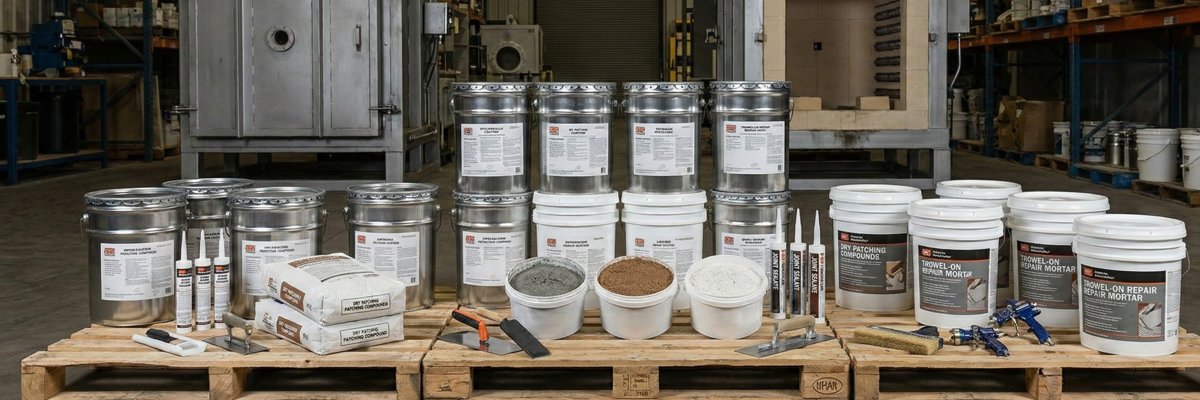
Our comprehensive range includes hot patch compounds for direct application to operating furnaces at 800-1400°C using phosphate or colloidal silica binders, spray coatings for uniform protective layers (1-5mm thickness) applied by pneumatic equipment, plastic repair mortars with trowelable consistency for hand application to small defects, patching compounds in ready-to-use formulations for convenience, ceramic protective coatings providing dense erosion-resistant surfaces, and expansion joint sealants maintaining gas-tight integrity in movement-prone areas.

All products are manufactured under ISO 9001:2015 quality systems, tested according to relevant ASTM standards (C133, C198, C401, C860), and supplied with complete application instructions including surface preparation, mixing procedures, application techniques, drying schedules, and heat-up protocols. Technical support available for material selection, application training, and troubleshooting to ensure successful repairs and maximum service life.

Fast-Acting Formulations

Quick setting (2-8 hours) enables rapid return to service.

Hot & Cold Application

Options for operating furnace or shutdown maintenance.

Multiple Application Methods

Spray, trowel, brush, or gun application for any situation.

Emergency Stock Available

Expedited delivery for urgent furnace failures (7-10 days).

Quick Specifications
  • Temperature Range: 900-1650°C
  • Setting Time: 2-8 hours
  • Application Temp: 20-1400°C
  • Repair Thickness: 5-50 mm
  • Coverage Rate: 1-3 kg/m²/mm
  • Service Life: 3-36 months
  • Packaging: 10-25 kg
  • MOQ: 100-500 kg
Request TDS
PRODUCT RANGE

Comprehensive Coating & Repair Portfolio

Complete range of maintenance materials for every repair scenario from emergency hot patches to preventive protective coatings.

Coatings and Repair Materials Range

Hot Patch Compounds

Emergency

Emergency repair materials for direct application to operating furnace surfaces at 800-1400°C. Phosphate or colloidal silica-bonded formulations cure through dehydration within 30-120 minutes without production shutdown.

  • Application Temp: 800-1400°C
  • Setting: 30-120 minutes on hot surface
  • Service Temp: 1200-1650°C
  • Thickness: 10-50mm per application
  • Applications: Emergency spall repairs, crack sealing, erosion patches on operating units

Spray Coatings

Popular

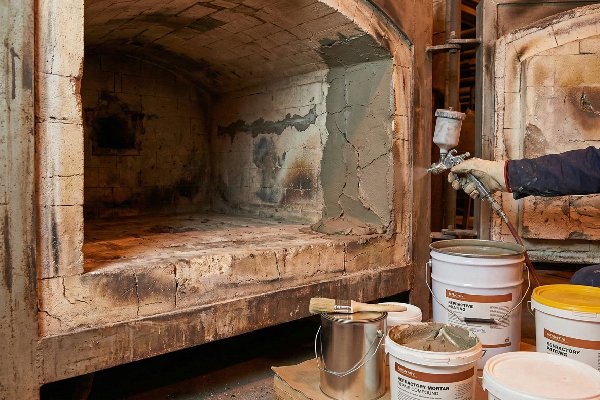
Pneumatically-applied protective coatings providing uniform coverage for erosion protection, chemical resistance, and thermal barrier functions. Fine aggregate formulations (under 1mm) for excellent atomization and adhesion.

  • Application Method: Pneumatic spray (3-6 bar)
  • Coating Thickness: 1-5mm per pass
  • Service Temp: 1200-1500°C
  • Coverage: 50-100 m²/hour application rate
  • Applications: Preventive hot face protection, large-area maintenance coating

Plastic Repair Mortars

Trowelable consistency repair mortars for hand application to small and medium defects. Pre-mixed to optimal working consistency, eliminating field mixing variations and ensuring consistent quality.

  • Application: Trowel, knife, or hand forming
  • Setting Time: 4-6 hours at 20°C
  • Service Temp: 1100-1550°C
  • Workability: 45-60 minutes pot life
  • Applications: Brick joint repairs, small spall filling, surface smoothing

Patching Compounds

Fast-setting patching materials for filling cracks, pinholes, and small erosion areas. Ready-to-use convenience formulations ideal for maintenance teams requiring simple, reliable repairs without specialized equipment.

  • Ready-to-use: Add water only
  • Fast-set: 2-4 hours working strength
  • Service Temp: 900-1400°C
  • Patch Size: 10-100mm diameter spots
  • Applications: Crack filling, pinhole sealing, minor defect correction

Ceramic Protective Coatings

Dense ceramic coatings providing superior erosion resistance, chemical attack protection, and extended hot face life. Applied to high-wear areas prone to abrasion from particulates, molten materials, or gas flows.

  • Coating Thickness: 3-10mm
  • Erosion Resistance: Excellent abrasion protection
  • Service Temp: 1300-1600°C
  • Service Life: 12-36 months typical
  • Applications: Cyclone linings, transfer chute protection, slag line coating

Expansion Joint Sealants

Flexible high-temperature sealants for expansion joints, shell-to-lining gaps, and brick-to-brick movement joints. Maintain gas-tight seal while accommodating thermal expansion/contraction cycles without cracking.

  • Flexibility: Accommodates 5-20mm movement
  • Gas-tight: Prevents infiltration and heat loss
  • Service Temp: 1000-1400°C
  • Joint Width: 10-50mm typical
  • Applications: Expansion joints, burner ports, door seals, shell penetrations
TECHNICAL DATA

Technical Specifications by Product Type

Detailed physical and performance properties for all coating and repair materials.

Property Unit Hot Patch Spray Coating Plastic Mortar Ceramic Coating
Service Temperature °C 1200-1650 1200-1500 1100-1550 1300-1600
Application Temperature °C 800-1400 15-35 (cold) 15-35 (cold) 15-35 (cold)
Setting/Cure Time hours 0.5-2 (hot) 6-12 4-6 8-24
Application Thickness mm 10-50 1-5 5-30 3-10
Cold Crushing Strength MPa 15-30 25-40 20-35 40-70
Coverage Rate kg/m²/mm 1.8-2.2 1.2-1.8 1.6-2.0 2.0-2.5
Service Life months 3-12 (temp) 6-18 12-24 12-36
APPLICATIONS

Maintenance Applications Across Industries

Our coating and repair solutions serve critical maintenance needs across multiple high-temperature industries.

Emergency Repairs

Unexpected spalling, crack development, erosion damage requiring immediate attention without production shutdown.

Preventive Coating

Proactive hot face protection to prevent erosion, extend campaign life, and reduce maintenance costs.

Campaign Extension

Strategic repairs during brief outages to extend furnace campaign beyond planned shutdown dates.

Scheduled Maintenance

Planned repairs during routine shutdowns to address accumulated wear and prevent future failures.

KEY FEATURES

Why Choose Our Repair & Coating Solutions?

Quality-assured maintenance solutions for reliable performance in demanding environments.

Rapid Deployment

Fast-setting formulations enable quick turnaround. Emergency stock available for urgent needs with expedited 7-10 day delivery to minimize production loss during unexpected failures.

Hot Application Capability

Specialized hot patch formulations apply directly to 800-1400°C surfaces, enabling repairs without shutdown and avoiding $50K-500K/day production losses in critical operations.

Campaign Life Extension

Protective coatings and strategic repairs extend furnace campaigns by 20-50%, reducing annual reline costs and improving production uptime through preventive maintenance.

FREQUENTLY ASKED QUESTIONS

Coatings & Repairs FAQ

Common questions about coating and repair material selection, application, and performance.

Hot patch materials can be applied directly to operating furnace surfaces at temperatures of 800-1400°C while the furnace remains in operation, utilizing heat-resistant binders (phosphates, colloidal silica, or sodium silicate) that cure through dehydration and chemical reaction at elevated temperatures. They adhere through rapid moisture loss and chemical bonding within 30-120 minutes, allowing continued operation during repair.

Cold patch materials are applied to ambient temperature surfaces during scheduled shutdowns, using conventional binders (calcium aluminate cement, epoxy resins, or polymer binders) that cure at room temperature through hydraulic or chemical reactions over 6-24 hours.

Hot patching enables emergency repairs without production stoppage but provides temporary fixes (3-12 months service), while cold patching during shutdowns provides permanent repairs with full service life matching the base lining. Application thickness for hot patches is typically 10-50mm, while cold patches can be applied up to 100-200mm thick.

Refractory coating service life depends on application method, operating temperature, thermal cycling frequency, chemical exposure, and mechanical abrasion.

Protective spray coatings (1-3mm thickness) typically last 6-18 months in continuous operation at 1200-1400°C with regular thermal cycling, requiring annual reapplication as preventive maintenance. Ceramic coatings (3-10mm) provide 12-36 months protection in moderate temperature environments (900-1200°C) with excellent chemical resistance.

Anti-spalling coatings on cyclic furnace applications (batch furnaces, shuttle kilns) last 100-500 heat-cool cycles depending on temperature swing magnitude.

Proper surface preparation (cleaning, roughening), correct coating thickness (not too thin or thick), controlled drying (slow moisture removal), and gradual heat-up extend coating life significantly. Regular inspection and touch-up repairs maintain protective integrity.

Yes, many refractory repair and coating materials are specifically formulated for spray application using pneumatic spray equipment, airless spray pumps, or hand-operated spray guns.

Application methods include:

  • Wet spray (refractory castable consistency sprayed at 3-6 bar pressure)
  • Dry spray or gunning (dry material mixed with water at the nozzle)
  • Aerosol spray (pre-packaged pressurized cans for small repairs)

Equipment options:

  • Industrial spray rigs (50-200 kg/hour capacity)
  • Portable gunning machines (20-50 kg/hour)
  • Manual spray bottles for detail work

Advantages include uniform coverage (1-5mm per pass), reduced material waste (5-15% vs 20-30% for troweling), faster application (50-100 m²/hour vs 10-20 m²/hour manual), and access to difficult areas. Proper training required for consistent results.

Proper surface preparation is critical for coating adhesion and performance:

Cleaning removes loose material through wire brushing, compressed air blowing (5-7 bar pressure), or water washing for cold surfaces, followed by removal of oils, salts, and contaminants using degreasing agents or acid washing (10% hydrochloric acid for alkali deposits).

Roughening creates mechanical bonding surface through sandblasting (6-8 bar, 40-60 grit), needle scaling, or scarifying to achieve 3-5mm surface profile depth.

Priming applies bonding agents including colloidal silica primers for siliceous substrates, phosphate primers for high-alumina surfaces, or sodium silicate primers for basic refractories, applied 1-2 hours before coating.

Moisture control ensures surface is dry (less than 3% moisture) for cold application or preheated (200-400°C) for hot application.

For hot surface application (800-1400°C), cleaning involves mechanical scraping and compressed air only, avoiding water or chemical treatments that create steam.

Emergency repair timeline depends on repair material type, application temperature, and heat-up schedule required:

Fast-setting cold patches achieve handling strength in 2-4 hours at ambient temperature, can be carefully heated after 6-8 hours initial cure, and allow full temperature operation in 12-24 hours with controlled heat-up (50-100°C/hour).

Hot patches applied to operating surfaces (800-1400°C) cure within 30-120 minutes through rapid dehydration, develop working strength during application, and require no additional heat-up time since furnace remains in operation.

Plastic repair mortars provide trowelable consistency, set in 4-6 hours, and require 24-48 hour drying before heating to avoid steam pressure damage.

For true emergencies where production cannot stop, hot patching allows continued operation while repair cures, though these are temporary fixes requiring permanent cold repair during next scheduled shutdown. Proper heat-up rates critical - too fast causes steam explosions, thermal shock cracking, and repair failure.

Refractory repair and coating materials are tested according to:

  • ASTM C401 - Chemical analysis of refractory materials
  • ASTM C133 - Cold crushing strength
  • ASTM C198 - Modulus of rupture
  • ASTM C860 - Mortar properties
  • ASTM C704 - Abrasion resistance
  • ASTM C1171 - Quantitative chemical analysis
  • ISO 1927 - Refractory mortars
  • EN 993 series - European refractory testing methods

Physical properties testing covers setting time at 20°C (ASTM C191 modified), adhesion strength to substrate (pull-off testing per ASTM C1583), thermal shock resistance (water quench cycles), and shrinkage during drying/firing.

Quality certifications include ISO 9001:2015 (quality management), ISO 14001:2015 (environmental management). Manufacturers provide mill test certificates with batch-specific data including chemical composition, physical properties, and application data. Third-party inspection available through SGS, Bureau Veritas, Intertek for export shipments.

RELATED PRODUCTS

Complete Maintenance Solutions

Explore complementary products for comprehensive refractory maintenance.

Refractory Mortars

Bonding materials for brick installations and jointing repairs.

Learn More
Gunning & Ramming Mixes

Monolithic repair materials for larger area rehabilitation.

Learn More
Refractory Castables

Pourable refractories for complete lining replacement.

Learn More
Fire Bricks

Replacement bricks for permanent shutdown repairs and rebuilds.

Learn More

Emergency Repair Assistance Available 24/7

When unexpected furnace damage threatens production, our fast-acting repair materials and emergency delivery service can save your campaign. Contact our technical team for immediate support.