INSULATION

Insulating Fire Bricks (IFB)

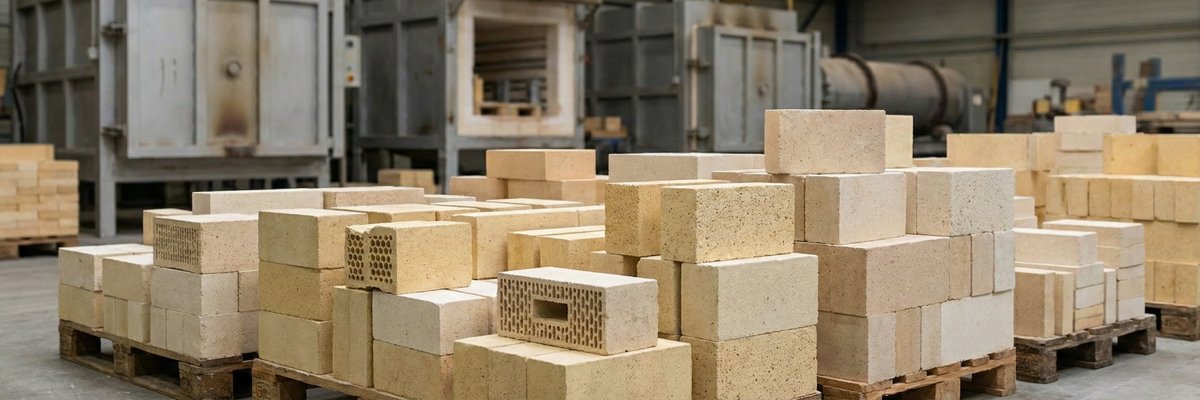
Premium insulating fire bricks engineered for superior thermal insulation and energy efficiency up to 1760°C. Available in ASTM C155 grades (IFB 20, 23, 26, 28, 30, 32) serving steel, cement, glass, and petrochemical industries worldwide.

Temperature Range 900-1760°C
Certification ISO 9001:2015
Export 30+ Countries
Insulating Fire Bricks IFB
Product Overview

Energy-Efficient Thermal Insulation Solutions

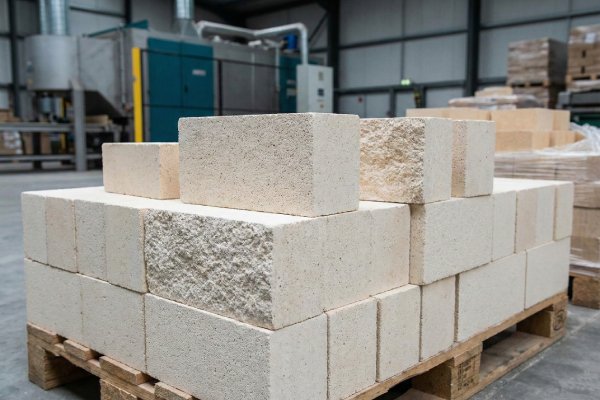
Insulating fire bricks (IFB) are lightweight refractory materials specifically engineered to minimize heat loss in high-temperature industrial equipment. Unlike dense refractories designed for strength and abrasion resistance, IFB prioritizes thermal insulation through high porosity (65-85%) and low bulk density (0.4-1.3 g/cm³). This unique cellular structure dramatically reduces thermal conductivity to 0.15-0.45 W/m·K, enabling substantial energy savings of 20-40% in furnace operations.

Manufactured per ASTM C155 standards, our IFB product range spans six standard grades from IFB 20 (900-1000°C, lightest) to IFB 32 (1760°C, highest performance). Each grade is carefully formulated using calcined alumina-silicate materials, organic burnout agents, and specialized binding systems. The manufacturing process creates interconnected pores through controlled firing, producing bricks that combine excellent insulation properties with adequate mechanical strength for backup linings, kiln car construction, expansion joints, and selective hot face applications.

RefractorySource partners with certified manufacturers utilizing advanced production technologies including vacuum forming, extrusion, and precision firing. All IFB grades undergo comprehensive testing per ASTM methods C133 (crushing strength), C182 (refractoriness), C113 (reheat change), C210 (physical properties), and C201 (thermal conductivity). Complete mill test certificates accompany every shipment, ensuring consistent quality and performance for global customers across steel, cement, glass, petrochemical, and power generation industries. Custom sizes, shapes, and specialty formulations available upon request.

Superior Energy Efficiency

Low thermal conductivity (0.15-0.45 W/m·K) reduces heat loss by 20-40%, cutting fuel costs and CO₂ emissions significantly.

Lightweight Construction

Low bulk density (0.4-1.3 g/cm³) reduces structural load on furnace steel framework and enables faster thermal response times.

ASTM C155 Certified Grades

Six standard IFB grades (20, 23, 26, 28, 30, 32) covering 900-1760°C temperature range for diverse industrial applications.

Custom Specifications

Standard 9"×4.5"×3" and 9"×4.5"×2.5" sizes, plus custom shapes, anchors, and specialty configurations upon request.

Quick Specifications
  • Temperature Range:
    900-1760°C (ASTM C155 grades)
  • Bulk Density:
    0.4-1.3 g/cm³ (20-32 PCF)
  • Thermal Conductivity:
    0.15-0.45 W/m·K at 400°C
  • Porosity:
    65-85% (varies by grade)
  • Standards:
    ASTM C155, ISO 9001:2015
  • Standard Sizes:
    9"×4.5"×3", 9"×4.5"×2.5"
  • Energy Savings:
    20-40% fuel reduction

ASTM C155 Insulating Fire Brick Grades

Comprehensive range of lightweight insulating refractories covering 900-1760°C temperature applications

Insulating Fire Bricks Product Range

IFB 20 (900-1000°C)

Ultra-lightweight insulating fire bricks for cold face backup linings and low-temperature applications. Excellent insulation efficiency with bulk density of 20 PCF (0.4-0.6 g/cm³).

  • Temperature: 900-1000°C (1652-1832°F)
  • Bulk Density: 0.4-0.6 g/cm³ (20 PCF)
  • Thermal Conductivity: 0.15-0.20 W/m·K
  • Applications: Cold face linings, chimney insulation
Most Popular

IFB 23 (1260°C)

Most economical and widely used grade for general backup lining applications. Balanced insulation properties with adequate mechanical strength for 23 PCF density.

  • Temperature: 1260°C (2300°F)
  • Bulk Density: 0.6-0.8 g/cm³ (23 PCF)
  • Thermal Conductivity: 0.20-0.28 W/m·K
  • Applications: Furnace backup linings, kiln car sides

IFB 26 (1430°C)

Balanced performance grade offering good insulation with improved mechanical strength. Suitable for moderate hot face applications at 26 PCF bulk density.

  • Temperature: 1430°C (2600°F)
  • Bulk Density: 0.8-1.0 g/cm³ (26 PCF)
  • Thermal Conductivity: 0.28-0.35 W/m·K
  • Applications: Furnace walls, expansion joints

IFB 28 (1540°C)

Higher temperature capability for selective hot face applications with 28 PCF density. Good balance of insulation and structural integrity for demanding conditions.

  • Temperature: 1540°C (2800°F)
  • Bulk Density: 1.0-1.2 g/cm³ (28 PCF)
  • Thermal Conductivity: 0.32-0.40 W/m·K
  • Applications: Kiln car tops, furnace roofs
Premium

IFB 30 (1650°C)

Premium grade for high-temperature hot face applications with 30 PCF density. Enhanced mechanical strength and refractoriness for critical service conditions.

  • Temperature: 1650°C (3000°F)
  • Bulk Density: 1.1-1.25 g/cm³ (30 PCF)
  • Thermal Conductivity: 0.38-0.45 W/m·K
  • Applications: High-temp furnaces, ceramic kilns
Ultra Premium

IFB 32 (1760°C)

Highest performance grade for extreme temperature hot face applications. Maximum refractoriness at 32 PCF density for specialized high-temperature processes.

  • Temperature: 1760°C (3200°F)
  • Bulk Density: 1.2-1.3 g/cm³ (32 PCF)
  • Thermal Conductivity: 0.40-0.48 W/m·K
  • Applications: Glass melting, specialty furnaces

Bubble Alumina Bricks

Advanced hollow alumina sphere technology for exceptional high-temperature insulation. 70-90% Al₂O₃ content with superior thermal shock resistance.

  • Temperature: up to 1700°C (3092°F)
  • Al₂O₃ Content: 70-90%
  • Bulk Density: 1.2-1.8 g/cm³
  • Applications: Glass industry, petrochemical reactors

Mullite Insulating Bricks

Synthetic mullite-based insulating bricks with excellent creep resistance and thermal stability. Ideal for high-performance applications requiring dimensional stability.

  • Temperature: up to 1600°C (2912°F)
  • Mullite (3Al₂O₃·2SiO₂) matrix
  • Bulk Density: 1.0-1.4 g/cm³
  • Applications: Tunnel kilns, shuttle kilns
Technical Data

Comprehensive Technical Specifications

Detailed physical and thermal properties per ASTM C155 standard testing methods

Property Unit IFB 20 IFB 23 IFB 26 IFB 28 IFB 30 IFB 32
Maximum Use Temperature °C 900-1000 1260 1430 1540 1650 1760
Bulk Density g/cm³ 0.4-0.6 0.6-0.8 0.8-1.0 1.0-1.2 1.1-1.25 1.2-1.3
Bulk Density (PCF) lb/ft³ 20 23 26 28 30 32
Thermal Conductivity (400°C) W/m·K 0.15-0.20 0.20-0.28 0.28-0.35 0.32-0.40 0.38-0.45 0.40-0.48
Apparent Porosity % 75-85 70-80 65-75 60-70 55-65 50-60
Cold Crushing Strength MPa 1.0-2.5 2.0-4.0 3.0-6.0 4.0-8.0 5.0-10.0 6.0-12.0
Permanent Linear Change (1000°C) % ±0.5 ±0.5 -0.3 to +0.2 -0.3 to +0.2 -0.2 to +0.1 -0.2 to +0.1
Al₂O₃ Content % 30-45 42-48 48-55 55-65 65-75 72-80
Fe₂O₃ Content % <2.5 <2.0 <1.5 <1.2 <1.0 <0.8
Modulus of Rupture (Hot) MPa 0.5-1.2 1.0-2.0 1.5-3.0 2.0-4.0 2.5-5.0 3.0-6.0
Applications

Industries & Applications

Energy-efficient insulation solutions across high-temperature industrial sectors

Steel & Metallurgy

Backup linings for blast furnaces, ladle insulation, tundish covers, reheat furnace walls, and annealing furnace insulation for energy efficiency.

Learn More
Cement & Lime

Rotary kiln backup linings, preheater insulation, cooler linings, and expansion joints reducing heat loss in pyroprocessing operations.

Learn More
Glass Manufacturing

Glass tank crown insulation, regenerator backup, forehearth covers, annealing lehr insulation, and feeder channel linings for thermal management.

Learn More
Petrochemical

Cracking furnace insulation, reformer linings, catalyst regenerator backup, and reactor vessel insulation for process efficiency and safety.

Learn More
Power Generation

Boiler wall insulation, flue gas duct linings, stack linings, and thermal power plant equipment insulation for heat retention and efficiency.

Learn More
Foundry & Casting

Melting furnace backup linings, holding furnace insulation, heat treatment equipment, and drying oven insulation for energy conservation.

Learn More
Ceramic Industry

Kiln car construction (tops and sides), tunnel kiln walls, shuttle kiln roofs, and roller hearth kiln insulation for uniform heat distribution.

Learn More
Incinerators & Waste

Incinerator backup linings, chimney insulation, waste-to-energy plant insulation, and emission control system linings for thermal protection.

Learn More
Specific Applications
  • Backup linings for furnace walls, roofs, and floors
  • Kiln car tops, sides, and undercarriages
  • Expansion joints and thermal breaks
  • Chimney and stack linings for flue gas systems
  • Forge and heat treatment furnace insulation
  • Soaking pit covers and ladle covers
  • Tunnel kiln and shuttle kiln construction
  • Boiler wall and duct insulation systems
  • Petrochemical reactor and reformer backup
  • Glass melting tank crown insulation
  • Refractory anchoring and support systems
  • Custom shapes for complex geometries
Features & Benefits

Why Choose RefractorySource IFB?

Superior quality, performance, and service excellence

Superior Energy Efficiency

Our IFB products deliver exceptional thermal insulation with thermal conductivity as low as 0.15 W/m·K, reducing energy consumption by 20-40% compared to conventional dense refractories. Lower bulk density (0.4-1.3 g/cm³) and high porosity (65-85%) minimize thermal mass, enabling faster heating/cooling cycles and reduced fuel costs. Customers typically achieve ROI within 12-24 months through lower operating costs and improved process efficiency.

ASTM C155 Certified Quality

All IFB grades manufactured to strict ASTM C155 specifications with comprehensive testing per ASTM C133 (crushing strength), C182 (refractoriness), C113 (reheat change), C210 (physical properties), and C201 (thermal conductivity). ISO 9001:2015 certified production facilities ensure consistent quality batch after batch. Complete mill test certificates and third-party verification available, providing documentation confidence for international projects and stringent quality requirements.

Comprehensive Grade Range

Six ASTM C155 standard grades (IFB 20, 23, 26, 28, 30, 32) covering 900-1760°C temperature range, plus specialty grades including bubble alumina and mullite bricks. Each grade engineered for specific applications balancing insulation efficiency, mechanical strength, and temperature capability. Expert technical support helps select optimal grade combination for multi-layer lining systems maximizing performance and minimizing costs across diverse industrial applications.

Lightweight Construction Benefits

Low bulk density (0.4-1.3 g/cm³) significantly reduces structural load on furnace steel framework, enabling lighter support structures and lower construction costs. Reduced thermal mass allows faster heat-up and cool-down cycles, improving production flexibility and reducing thermal stress. Lightweight handling simplifies installation, reduces labor costs, and minimizes physical strain during construction. Lower transportation costs per cubic meter compared to dense refractories provide additional economic advantages.

Custom Specifications Available

Standard brick sizes (9"×4.5"×3", 9"×4.5"×2.5", 9"×4.5"×2", and metric equivalents) plus custom shapes, arches, wedges, and special geometries manufactured to order. Custom formulations tailored to specific temperature profiles, atmosphere conditions, or mechanical requirements. Precision machining services for tight-tolerance applications. Anchoring systems, hexagonal shapes for kiln car construction, and specialty configurations ensure perfect fit for complex furnace designs and specialized applications.

Global Export Expertise

Extensive experience exporting to 30+ countries with comprehensive understanding of international standards, documentation requirements, and logistics. Seaworthy packaging with wooden pallets, shrink wrapping, and moisture protection ensures damage-free delivery worldwide. Full export documentation including commercial invoice, packing list, mill test certificates, certificate of origin, and bill of lading. Container loading optimization and freight forwarding coordination provide seamless export experience from India to your facility.

FAQ

Frequently Asked Questions

Common questions about insulating fire bricks answered by our technical experts

IFB grades are classified per ASTM C155 based on maximum use temperature and bulk density (PCF - pounds per cubic foot). IFB 20 (900-1000°C, 20 PCF) is lightest for cold face applications. IFB 23 (1260°C, 23 PCF) is most economical for general backup linings. IFB 26 (1430°C, 26 PCF) offers balanced insulation and strength. IFB 28 (1540°C, 28 PCF) provides higher temperature capability. IFB 30 (1650°C, 30 PCF) and IFB 32 (1760°C, 32 PCF) are premium grades for hot face applications requiring extreme temperature resistance.

Higher grade numbers indicate higher density, temperature capability, and mechanical strength but slightly reduced insulation efficiency. Selection depends on application temperature, mechanical load requirements, and whether used for backup or hot face lining.

Insulating fire bricks typically reduce energy consumption by 20-40% compared to conventional dense refractories. The exact savings depend on furnace design, operating temperature, and lining configuration. IFB's low thermal conductivity (0.15-0.45 W/mK) minimizes heat loss through furnace walls, reducing fuel consumption.

Additionally, IFB's low thermal mass (heat storage) enables faster heating and cooling cycles, further reducing energy costs. Most installations achieve ROI within 12-24 months through reduced fuel bills. For precise energy savings calculations, consult our technical team with your specific furnace parameters.

IFB thermal conductivity ranges from 0.15 to 0.45 W/m·K at 400°C, significantly lower than dense refractories (1.0-3.0 W/m·K). Lower grade IFB (20-23) offers thermal conductivity of 0.15-0.25 W/m·K for maximum insulation. Mid-grade IFB (26-28) provides 0.25-0.35 W/m·K balancing insulation and mechanical strength. High-grade IFB (30-32) has 0.35-0.45 W/m·K suitable for hot face applications.

Thermal conductivity increases with temperature and density but remains substantially lower than conventional refractories, enabling superior energy efficiency and reduced heat loss through furnace structures.

IFB application depends on grade and operating conditions. Lower grades (IFB 20-23) are suitable only for backup/cold face linings and low-temperature applications (below 1260°C). Mid-grades (IFB 26-28) can be used for hot face linings in moderate temperature applications (1430-1540°C) without severe mechanical stress or abrasion.

High grades (IFB 30-32) are specifically designed for hot face applications up to 1650-1760°C including kiln car tops, furnace roofs, and expansion joints. For applications involving slag contact, abrasion, or structural loads, dense refractories are recommended for working linings with IFB as backup insulation.

IFB service life typically ranges from 3-8 years depending on application, operating temperature, thermal cycling, and mechanical stress. In backup lining applications with stable temperatures, IFB can last 5-8 years or longer. In moderate hot face applications (IFB 26-28) with controlled thermal cycling, expect 3-5 years service life.

In severe hot face applications (IFB 30-32) with rapid thermal cycling or high temperatures, service life may be 2-4 years. Proper installation, adequate expansion joints, compatible mortar selection, and gradual heat-up procedures significantly extend IFB life. Avoid mechanical shock, thermal shock, and exposure beyond rated temperature limits to maximize longevity.

RefractorySource insulating fire bricks are manufactured to ASTM C155 standards and carry ISO 9001:2015 quality management certification. All IFB grades undergo rigorous testing per ASTM test methods including C133 (cold crushing strength), C182 (refractoriness), C113 (reheat linear change), C210 (physical properties), and C201 (thermal conductivity).

Complete test certificates and mill test reports are provided with every shipment. Custom testing and third-party verification can be arranged upon request. Our manufacturing partners maintain BIS (Bureau of Indian Standards) certification and follow international quality standards ensuring consistent product performance and reliability for global export markets.

Related Products

Complementary Refractory Solutions

Complete your refractory system with these related products

Fire Bricks

Dense fire bricks for working lining hot face applications paired with IFB backup layers for optimal thermal performance.

Learn More
Refractory Mortars

Specialized insulating mortars formulated for IFB installation ensuring proper bonding and thermal compatibility.

Learn More
Ceramic Fiber Products

Ultra-lightweight ceramic fiber blankets, boards, and modules for supplementary insulation and expansion joints.

Learn More
Precast Refractory Products

Precast insulating shapes, blocks, and modules for rapid installation and specialized IFB configurations.

Learn More

Ready to Reduce Your Energy Costs?

Get expert consultation and competitive quotes for your insulating fire brick requirements. Our technical specialists can help calculate potential energy savings and recommend optimal IFB grade selection.